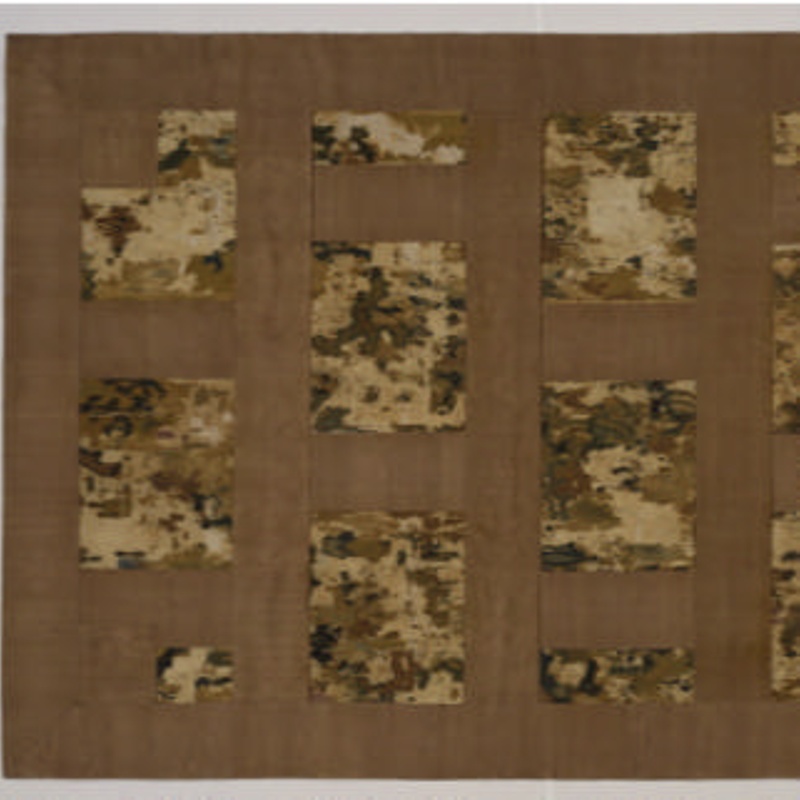
About this objectThis monk's robe—kesa (袈裟 kāṣāya)—was taken to Japan by the monk Kūkai from Tang dynasty China and is referred to as the Kenda Kokushi kesa (犍陀穀糸袈裟); kenda referring to its colour and kokushi to its tapestry weave. The patterning is meant to resemble the stains on the original monks' kesa which were patchworks of rags.
It is believed to be a robe interited by Kūkai from his teacher, the Chinese Buddhist master Huiguo 惠果(746–806), and subsequently listed in the inventiry of objects taken to Japan from China.
The central part uses silk threads of ten different colorus in a tapestry-weave pattern of clouds.
Date Made8th century
PeriodTang
Place MadeChina
Subject and Association KeywordsSilk
Subject and Association KeywordsPilgrimage
Subject and Association DescriptionLearn More: KNM 2010