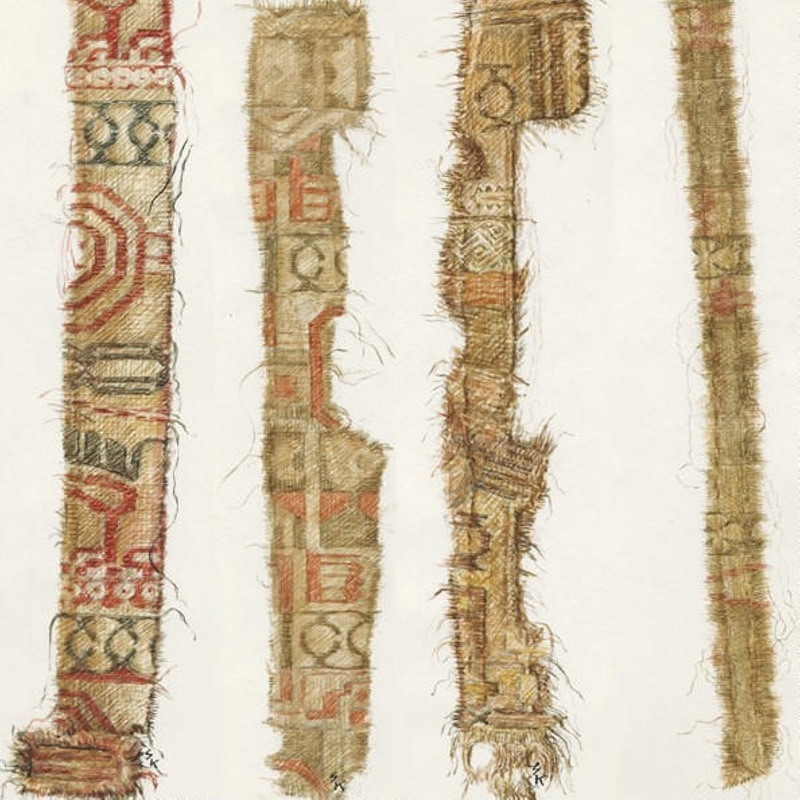
About this object277 pieces of fabric were recovered from the Oseberg shup burial [EXH118], along with textile implements such as small looms and tablets for tablet weaving. Over 80 fragments made of wool and possibly flax were parts of a tapestry showing a narrative scene. But there were also 110 pieces which came from 15 different patterned silks and together form 8m of band. They had been used to decorate clothes.
The fragmentary silks originated in west and central Asia, although one piece, with a pattern of a cross might have been acquired at a religious site in Ireland. They show patterns which were common along the Silk Roads, such as paired ducks. Other pieces were probably made locally by tablet weaving using imported or unwoven silk thread.
Date Made9th c.
Place MadeCentral Asia
Place MadePersia
Place Madewest Asia
Subject and Association KeywordsSilk
Subject and Association KeywordsDeath and burials
Subject and Association DescriptionLearn More: Vedeler 2014