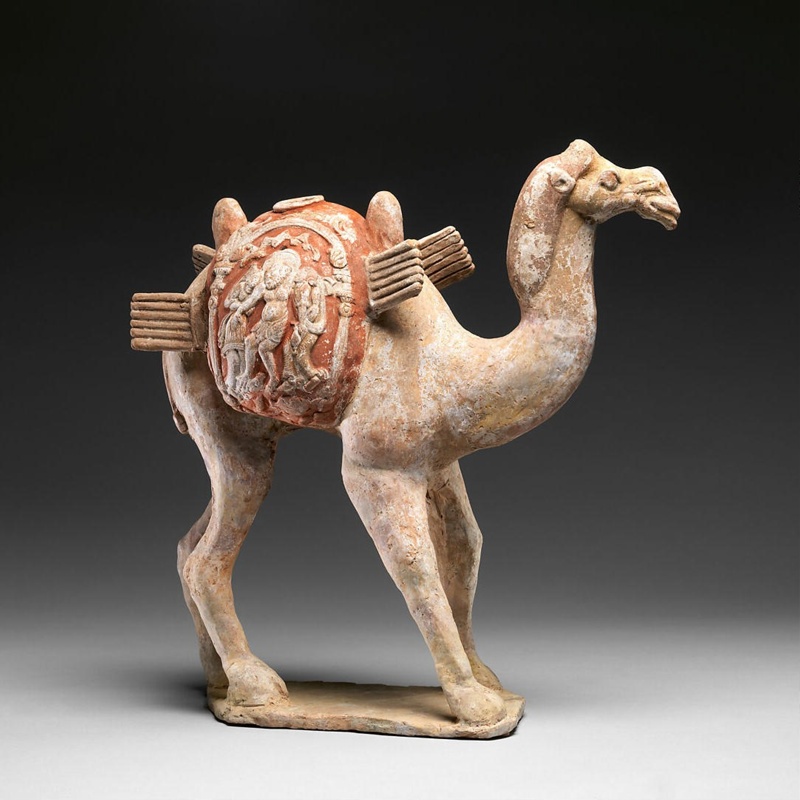
About this objectBactrian camels were part of life along the eastern Silk Roads—the dromedary was found to the west—used as pack animals. Terracotta models such as this are often found in tombs to be used in the afterlife.
The image on the saddlebags of this example is, however, unusual and its identity is uncertain. It has been intepreted as the Indian god Kubera, king of the Yakṣa. Like the Greek Dionysis, he is portrayed in drinking scenes being waited on by women. However, the full beard and absence of headgear are not typical. Another interpretation is that the three figures were inspired by representations of the Descent from the Cross. This was an important theme in early Christian iconography. Both interpretations show the fluidity of religious imagery across the Silk Roads.
Date Made6th-7th c.
PeriodSui
Place MadeChina
Subject and Association KeywordsPilgrimage
Subject and Association DescriptionLearn More: Whitfield and Sims-Williams 2004.
Medium and MaterialsEarthenware with appliqué relief decoration and pigment