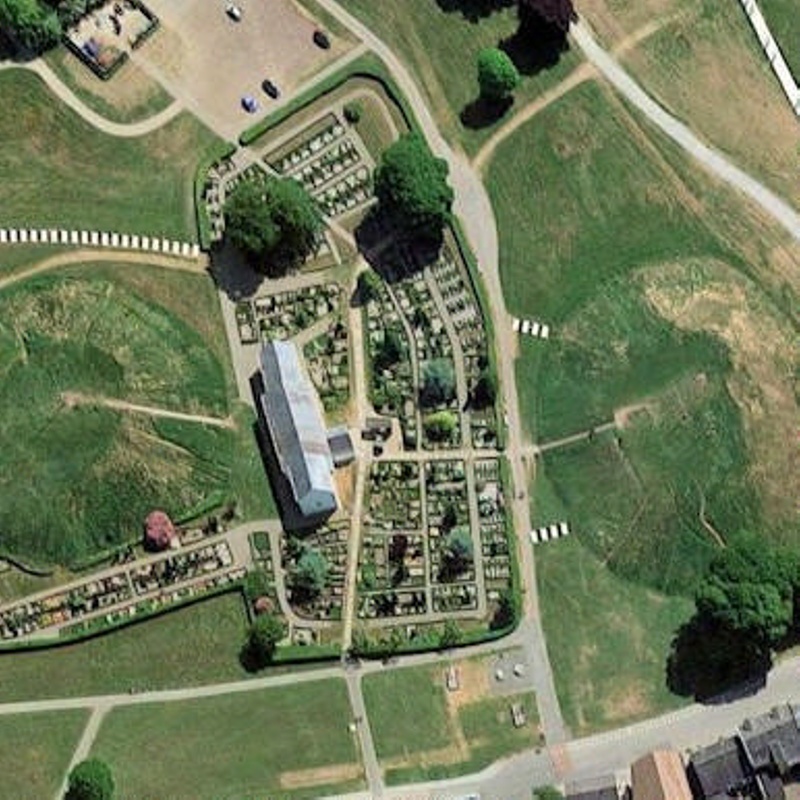
About this objectThis site at Jelling, Denmark, exemplifies the changes in burial practices brought by a new religion. There was originally a Bronze Age mound on the site and perhaps this is why it was selected—as a sacred spot—by the then ruler, Gorm the Old (d.c.958), to enlarge as a burial mound. Another mound was erected to its south. At some point a ship-shaped stone monument or ‘ship-setting’ was erected with the north mound at its centre.
His son, Harald Bluetooth (r.c.958–c.986), converted to Christianity as recorded on a runestone he had erected between the mounds [EXH8].
Harald built a church and possibly moved his father's bones and burial goods there as the burial chamber of the north mound was emptied in this period: the south mound never contained a burial. The current church is the fourth on the site: the three previous wooden churches burnt down. In addition, recent excavations have revealed a palisade enclosing a large area with large hall by the gate, possibly the royal camp of Harald.
Date Made10th century
PeriodViking
Subject and Association KeywordsDeath and burials
Subject and Association KeywordsShips
Subject and Association DescriptionLearn More: Jelling Project 2018; Randsborg 2008; Viking Archaeology;
Credit LineNational Museum of Denmark, Jelling Monuments