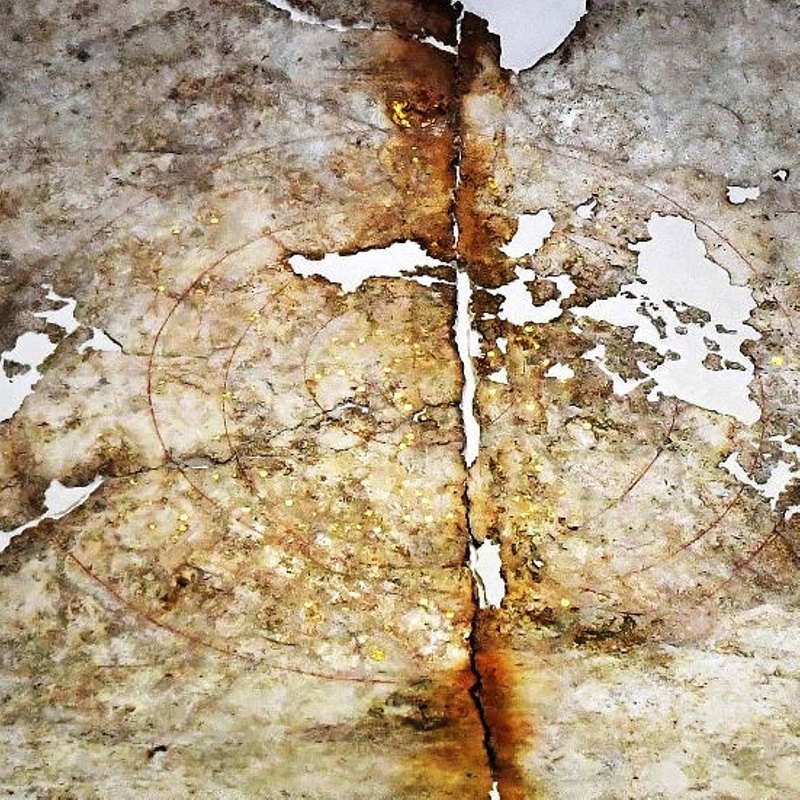
About this objectAstronomical knowledge was valued by the emperors and kings of the various polities in China as it was believed that celestial events mirrored those on earth: an event like a comet or a eclipse might be interpreted as a sign of a king's imminent fall from power and it was therefore important to have this knowledge in advance so that it could be managed. Over 1300 stars and planets have been plotted accurately, as shown in the Dunhuang Star Chart probably made around 700 in the Tang Capital, Chang'an. Stars were also useful for navigation, by land and sea.
This star chart—and others found in tombs in Korea and Japan—are almost certainly based on knowledge from China. This one shows 68 constellations or asterisms (stars were grouped differently from the Greek constellations) in which the stars are depicted using gold discs. The movement of celestial objects is also represented in the form of three concentric circles with another circle depicting the movement of the sun. The Polar Star is depicted at the centre.
The animals of the four directions were also influenced by Chinese examples.
Date Made7th to 8th c.
PeriodKofun
Place MadeJapan
Subject and Association KeywordsAstronomy
Subject and Association KeywordsDeath and burials
Subject and Association DescriptionLearn More: Bonnet-Bidaud et al. 2009; https://www.asuka-park.jp/kitoraguide/list/108.html
Medium and Materialsink and pigments on plaster
TechniqueFresco secco
Credit LineKitora Kofun Hekiga Taikenkan Shishin no Yakata museum